

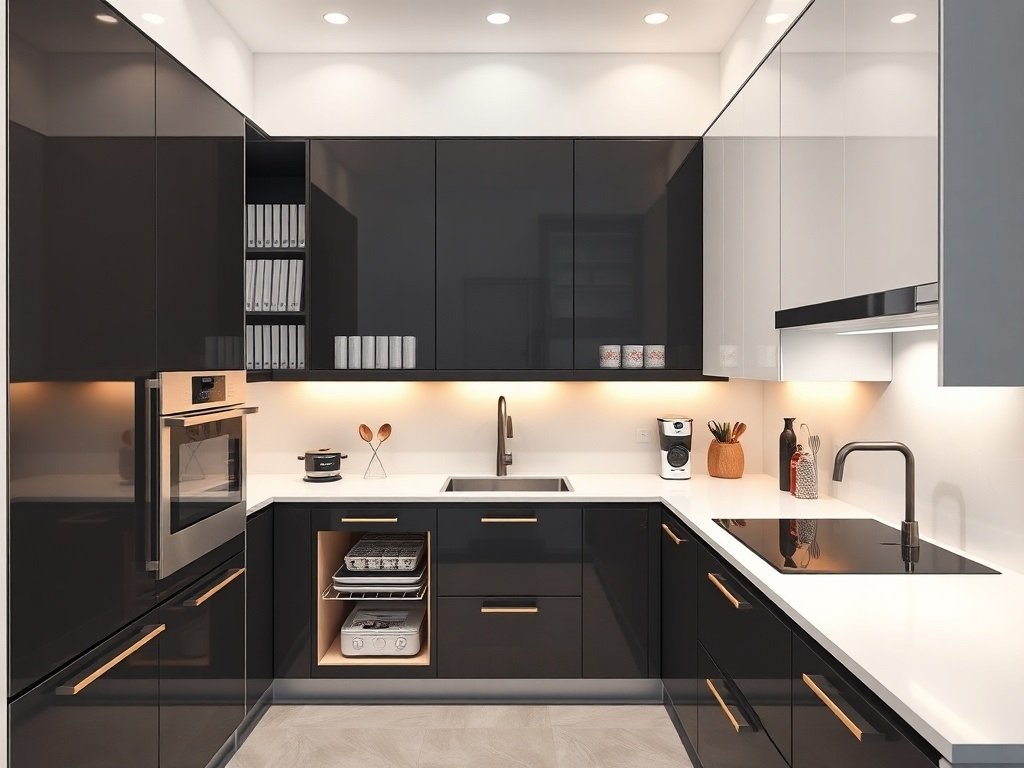
Ideas to remodel a small kitchen often start with simple changes, but when done right, they can completely transform how the space looks, feels, and functions every single day. Through careful design, smart arrangement, and the appropriate method, your small kitchen can transform into a functional, attractive area that operates like one twice as large.
This all-inclusive manual offers kitchen renovation options for all circumstances:
- Five design approaches that produce immediate results.
- Solutions for organization that enhance functionality without altering the structure.
- Transformations shown before and after that illustrate these concepts in practice.
Fashion and Visual Appeal
Compact kitchens can create a significant visual impression with the appropriate design decisions. These five design approaches can revamp your small kitchen without altering any walls.
1: Tactical Color Selections
The choice of color greatly affects the perception of space in a small kitchen. Light hues can give the illusion of larger walls and foster a breezy ambiance, whereas carefully placed dark elements can introduce depth and personality without dominating the area.
Compact Kitchen Color Approach:
Apply light hues (whites, soft grays, and delicate blues) to expansive areas such as cabinets and walls.
Incorporate darker shades in confined spaces (island bases, lower cabinets) for added depth.
Incorporate color via easily adjustable components such as fabrics and accessories.
Explore monochromatic palettes that establish visual continuity and diminish abruptness.
In residences with restricted natural light, warm whites instead of cool hues foster a snug yet airy atmosphere.
2: Illumination Impacts Outcome
Adequate lighting turns a small kitchen into a welcoming area. Effective lighting designs can create the impression of a more spacious, well-lit, and practical small kitchen.
Lighting Options for Compact Kitchens:
Combine various types of lighting (task, ambient, accent) to enhance depth.
Place under-cabinet lights to remove shadows on the counter and enhance the dimension.
Utilize pendant lighting to direct attention upwards, establishing an impression of loftiness.
Enhance natural light with minimal window coverings.
Options for light fixtures featuring transparent components that won’t add visual heaviness
to the area.
Light fixtures with adjustable brightness and higher lumens should be considered in locations where natural light is scarce.
3. Choosing Materials for Visual Impact
Materials have the ability to visibly enlarge or narrow an area. Even the tiniest kitchen may have a feeling of continuity and openness with the correct choices.
Material Advice for Compact Kitchens:
To bounce light, use reflecting surfaces like polished countertops or glass backsplashes.
Reduce sight breaks by using large-format flooring.
For a smooth transition, use the same countertop material as a backsplash.
For visual breathing room, think about replacing some higher cabinets with open shelves.
Use natural materials to add warmth without overpowering the room.
4: Cabinet Designs That Make Space Better
A kitchen’s perceived space is greatly influenced by cabinet design. The appropriate cabinet choices may make a small kitchen appear cleaner, more organized, and larger.
Cabinet Options for Visual Expansion:
Prefer simple, clean cabinet door styles (flat panel or shaker) to intricate designs.
Extend cabinets to the ceiling for optimal storage and visual appeal.
Use integrated handles or minimalist hardware that does not disrupt visual flow.
To create depth, consider glass-front cabinets for select uppers. Use similar cabinet colors to create a unified backdrop.
Install cabinets and panels that reach the ceiling to eliminate dust-collecting soffits and gain important storage space.
5. Cohesive Design Elements
In small kitchens, a coherent design promotes harmony and avoids visual confusion. A cohesive approach to colors, materials, and details makes small spaces feel purposeful rather than claustrophobic.
Creating Visual Harmony:
Restrict your color scheme to 2-3 primary colors along with some accent shades.
Maintain uniform hardware finishes throughout the area.
Reflect similar shapes and lines across various elements (for example, pairing round pendants with round hardware).
Establish a visual link between the kitchen features and nearby rooms.
Minimize visual clutter by opting for purposeful, minimalistic decor.
Organization and Layout – Enhancing Functionality in a Compact Space
The real challenge of a small kitchen lies in its effectiveness. Thoughtful layout decisions and organizational strategies can turn even the smallest kitchen into a highly functional workspace.
Effective Layout Strategies
An appropriate layout is crucial for maximizing the functionality of a small kitchen. Here are ways to enhance various configurations:
Use one wall for floor-to-ceiling cabinets for maximum storage.
Offer a visual focus at the far end to draw the eye through the space.
Use lighter colors on the top half of the kitchen to avoid a tunnel effect.
Consider removing a non-load-bearing partial wall to open sight lines to adjoining rooms.
6. Efficacy of L-Shaped Kitchen
Set the sink and dishwasher on one leg and the range on the other.
Add a narrow rolling cart for a movable work surface that can be used as needed.
Replace lazy Susans with corner drawers for easier access.
Use wall space for magnetic knife strips and utensil storage.
Build a coffee station in the short leg of the “L.”
7. Compact U-shaped design
Think about removing overhead cabinets on one side and adding open shelving.
Use a shallower refrigerator to maintain appropriate walkway width
Consider a peninsula with seating instead of an island to keep flow
Set up specific storage areas for specific cooking needs
Use narrow pull out pantry in wasted space
8. Peninsula Solutions
Design multi-purpose space for prep, dining, and work.
Install electrical outlets below, concealed for convenience.
Use the base for drawer storage (accessible from both sides). Maybe get rid of one wall cabinet to make it feel less closed in put in pendant lighting to define the space without walls.
Storage Ideas
Small kitchens need to maximize storage space. These strategies will help you maximize every inch:
9. Vertical storage potential
Ceiling-height cabinets for seasonal items, infrequently used equipment
Vertical dividers for baking sheets, cutting boards, and platters
Wall-mounted magnetic knife and metal tool strips
Pegboard or rail systems for hanging pots, pans, and utensils
Stackable or hanging cookware that takes up less space
10. Custom Cabinet Interiors:
Pull-out spice racks for limited space
Drawer dividers custom made to fit specific items and cooking styles
Dedicated storage for lids, wraps, and containers
Drawers for depth, as many tiers as possible
Corner solutions, such as pull-out shelving, utilize otherwise wasted space.
11. Simultaneous Task Components
Butcher blocks on wheels that serve as both an island and a dining table
Banquette seating with storage drawers underneath fold-down wall-mounted tables that disappear when not in use
Appliance garages that hide small electrics, sink cutting board covers that create extra prep space
12. Awkwardness of Space Utilization:
Pull-out pantry shelves in tight spaces between appliances and walls
Above refrigerator cabinets with fold-down doors for easy access
Under-sink organization that works around plumbing
Toe-kicked drawers for flat items such as baking sheets
Corner cabinet solutions that remove unreachable “black holes”