

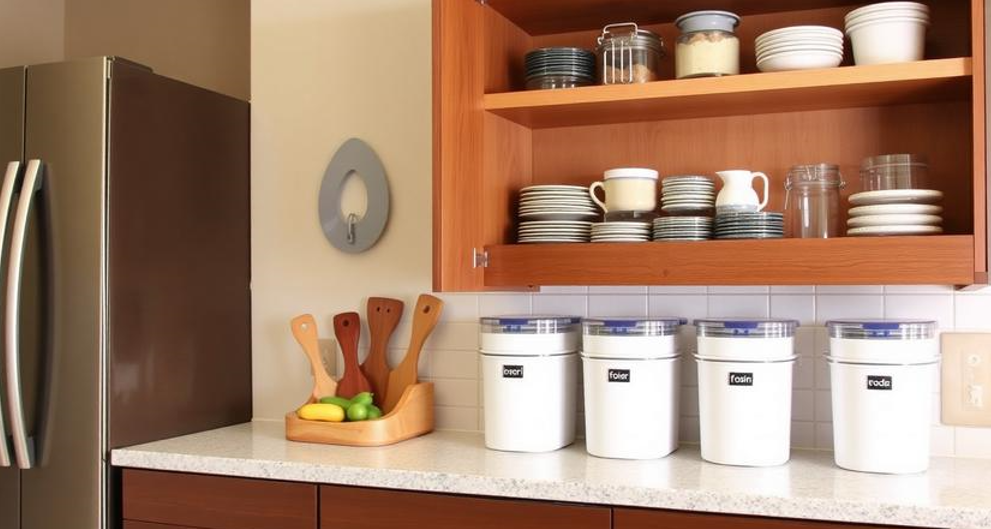
USA Home Services Pro helps homeowners solve everyday kitchen storage problems with smart, functional remodel solutions. If your kitchen feels cluttered, cramped, or poorly organized, our expert team designs storage solutions that maximize space and improve how your kitchen works for you. From custom cabinets to better layouts, we focus on creating kitchens that are efficient, organized, and built for real life.
Many homeowners start looking into kitchen remodel storage solutions because their kitchen no longer works the way it should. Cabinets feel cramped, countertops stay crowded, and finding basic items takes more time than necessary. These problems usually do not come from lack of space alone. In most cases, they are caused by poor layout and outdated storage design.
Why Storage Problems Develop in Kitchens?
Storage problems often build up gradually. Kitchens that were designed years ago were not meant to handle today’s cooking habits, appliances, or storage needs. As households grow and routines change, the original layout starts to feel restrictive.
Common causes include shallow cabinets, fixed shelves, limited drawer space, and poorly designed corners. Many kitchens also waste vertical wall space, leaving potential storage unused. Over time, these design issues create clutter and slow down everyday tasks.
A kitchen remodel addresses these problems at a structural level instead of treating the symptoms.
How a Kitchen Remodel Corrects Storage Layout Issues?
A remodel gives homeowners the opportunity to rethink how storage is distributed across the kitchen. Instead of placing cabinets based on appearance alone, storage is planned based on function and accessibility.
Cabinet Design That Improves Access
Modern cabinet systems are designed to improve reach and visibility. Pull out shelves, full depth drawers, and tall cabinets allow items to be stored in a way that makes sense. When cabinets are easy to access, fewer items end up forgotten or duplicated. This reduces clutter and makes daily use more efficient.
Using Vertical Space More Effectively
Many kitchens leave space unused above upper cabinets.During a remodel, this area can be converted into highly usable storage. For example, tall cabinets or stacked shelving allow items that are used less frequently to be stored neatly out of the way.
In particular, vertical storage is especially useful in kitchens where expanding floor space is not possible. By using height instead of width, the kitchen can hold more items while still maintaining an open, uncluttered feel.
Drawers as a Primary Storage Solution
Drawers have become a key part of modern kitchen storage design. Unlike traditional cabinets, drawers allow the entire storage area to be seen at once.
Deep drawers work well for cookware and small appliances. Shallow drawers keep utensils, tools, and spices organized. When drawers are planned carefully, they reduce the need for extra organizers and prevent items from piling up.
This approach also supports better workflow by keeping frequently used items close at hand.
Improving Pantry Storage During a Kitchen Remodel
Pantry storage is often overlooked, even though it plays a major role in kitchen organization. In many homes, pantry shelves are too deep or too narrow, which makes it hard to see what is stored. A kitchen remodel allows pantry storage to be redesigned for visibility and access. Pull-out pantry units, adjustable shelving, and vertical storage systems make better use of available space. These changes help reduce food waste and make grocery storage easier to manage.
Fixing Inefficient Corner Cabinets
Corner cabinets are one of the most common sources of wasted space. Without proper storage systems, items stored in corners are hard to reach and often ignored. During a remodel, corner cabinets can be upgraded with rotating shelves or pull-out systems. With these solutions in place, the full corner space can be used effectively without awkward reaching or wasted areas.
As a result, overall storage capacity is improved while at the same time keeping the kitchen more accessible and easier to use.
Storage Planning for Small Kitchen Remodels
Because space is limited, small kitchens require careful planning from the start. As a result, storage solutions must be efficient and purposeful without overwhelming the overall layout. In many cases, a small kitchen remodel includes narrow pull-out cabinets, hidden storage compartments, and multi-use cabinetry. These features, in turn, help maximize storage while preserving comfortable movement space.
Additionally, light finishes and simple cabinet designs can make the kitchen feel more open and less confined. However, appearance should always support functionality rather than replace it.
The Importance of Workflow in Storage Design
Good storage placement follows the natural flow of kitchen tasks. Storage should be located near the areas where items are used most often. For example, cooking tools should be near the stove, and dish storage should be close to the dishwasher. When storage follows workflow, the kitchen becomes easier to navigate and less tiring to use. A kitchen remodel allows these adjustments to be made before problems become permanent.
Long-Term Value of Storage-Focused Kitchen Remodels
Improved storage offers lasting benefits over time. First, a well-organized kitchen significantly reduces daily stress and saves valuable time. In addition, it improves cleanliness, since every item has a clear and designated storage space.
From a property value perspective, functional storage also plays an important role. In fact, buyers are more likely to notice kitchens that feel practical, efficient, and easy to use. As a result, storage improvements often have a greater impact than purely decorative features.
Ultimately, a kitchen remodel that solves storage problems delivers benefits that continue long after construction is complete.
Planning Storage Before Remodeling Begins
Before starting a kitchen remodel, it is important to review how the kitchen is currently used. Identifying where clutter forms and which areas feel inefficient helps guide better storage decisions. Planning storage based on real habits leads to better outcomes than copying layouts from showrooms or trends. Practical storage design focuses on daily use, not appearance alone.
Common Storage Mistakes to Avoid
Adding more cabinets does not always improve storage. Poor placement or oversized units can create new problems. Storage must be planned with balance and access in mind. Another mistake is ignoring future needs. Storage should allow flexibility as routines change. Adjustable shelves and modular systems help kitchens adapt over time.
Final Thoughts
Storage problems affect how a kitchen functions every day. Temporary fixes rarely solve the issue. A well-planned kitchen remodel offers permanent solutions by correcting layout flaws and improving storage access.
By focusing on cabinet design, drawer use, pantry layout, and workflow, kitchen remodel storage solutions fix storage problems at their source. The result is a kitchen that works better, stays organized longer, and supports daily use without frustration.
 ”Fix your kitchen storage problems contact USA Home Services Pro today.”
FAQ’s
Q. Should I get custom cabinets?
Ans. Yes, for tailored storage with pull-outs, deep drawers, and adjustable shelves.
Q. How do I maximize cabinet space?
Ans. Pull-out shelves, vertical organizers, lazy Susans, and corner drawers.
Q. How to handle a small kitchen?
Ans. Overhead storage, multi-purpose islands, wall-mounted racks, and drawer organizers.
Q. Are custom cabinets worth it?
Ans. Yes, they can solve tricky storage problems with deep drawers, pull-outs, and adjustable shelves.
Q. How can I use pantry doors?
Ans. Over-the-door racks, hooks, slim shelves for bottles and condiments.
Q. How to keep food accessible?
Ans. Categorize, rotate older items to front, and use pull-out trays or lazy Susans.